The International Court of Justice ruled that Myanmar committed genocide against the Rohingya, the first such finding against a state by that court. Presidents Trump, Xi and Putin issued a joint declaration after their first three-way meeting in Shenzhen. Stocks fell sharply, with Japan's Nikkei down 4.8% after Anthropic's Nasdaq debut. Houthi missiles damaged a Riyadh skyscraper. Kenya discharged its last Ebola patient, 37 days after its first case.
World mood: Uneasy · 52 stories from 920 headlines
The International Court of Justice ruled on Thursday that Myanmar committed genocide against its Rohingya minority. It is the first time the court has held a state responsible for genocide. The vote was nine to six. The case, brought by The Gambia, concerns the 2017 military operation that killed thousands and drove hundreds of thousands into Bangladesh. The Gambia welcomed the ruling. More than 1.3 million Rohingya remain displaced. Questions remain over how the judgment will be enforced.
Why it matters: The ruling sets a legal precedent for genocide cases elsewhere and bears on more than 1.3 million displaced Rohingya.
Myanmar's military launched an operation in Rakhine state in 2017 that sent hundreds of thousands of Rohingya fleeing to Bangladesh. The Gambia filed the case at the ICJ in 2019. Myanmar had denied genocide.
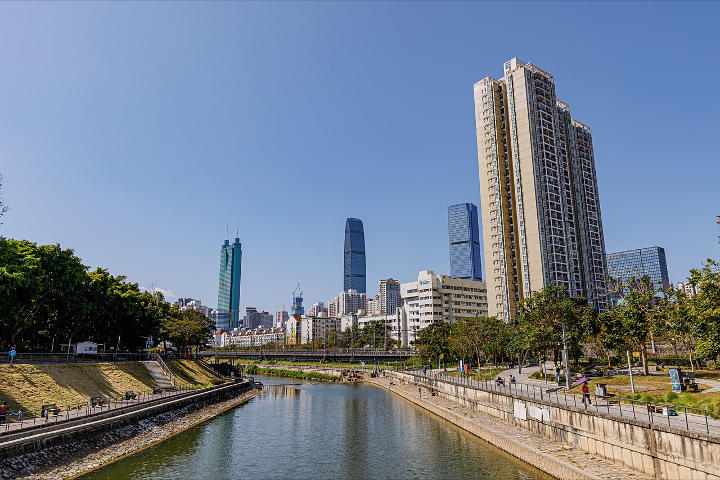
The leaders of the US, China and Russia met in Shenzhen on Thursday and signed a four-point joint declaration. It covers reducing nuclear risk, United Nations reform, energy supply stability and the International Criminal Court's jurisdiction. The text does not mention Ukraine or Iran. Trump called Putin a friend, which drew criticism from some world leaders. Analysts told outlets that no major breakthroughs came out of the roughly 70-minute talks.
Why it matters: Europe and Ukraine were not at the table, and the talks touch nuclear arms and energy supply worldwide.
The three leaders met on the sidelines of the APEC summit hosted by China. The US and Russia are in conflict over the war in Ukraine, and the US is also at war with Iran.
Anthropic shares closed around $97 on their first day, 17% above the $83 offer price. The Claude chatbot maker opened at $111.50. The company raised $81.3 billion, a record for an initial public offering, at a valuation near $1.5 trillion. Three protesters were arrested outside the exchange. Analysts warned the shares may be volatile, and the debut did not revive a weak AI trade.
Why it matters: It is the first listing of a pure AI company and a test of investor appetite for the sector.
Anthropic is a US artificial intelligence company founded in 2021. Investors have debated whether AI spending is a bubble.
The S&P 500 lost about 2% on Thursday, its fifth straight session of losses. The Nasdaq fell more than 2%. Asian stocks then fell on Friday, with SoftBank down more than 16%. South Korea's exchange triggered a sell-side halt on its main index. AMD closed down over 7% after a short seller report about China exposure.
Why it matters: Falling tech shares hit retirement savings and raise concern about the AI-driven rally.
AI companies have driven much of the stock market's gains. A scandal at Nvidia and doubts about AI valuations have weighed on shares.
Leaders of the coalition of the willing met in Berlin and said Europe has a united position for talks with Russia. US envoy Jared Kushner said Trump is open to a NATO-style security guarantee for Ukraine. Macron urged allies to reopen the question of Ukraine's NATO membership. German Chancellor Friedrich Merz criticized the Shenzhen format. Trump reportedly told the leaders by phone that Putin wants to end the war.
Why it matters: The talks decide how Ukraine's security would be guaranteed in any deal to end the war.
The coalition of the willing is a group of countries backing Ukraine against Russia's invasion. The US has led separate talks with Moscow.
Ukraine struck the Kerch Bridge to Crimea for the third time in four days, halting rail traffic. Putin said the response would be far more painful and ruled out a limited ceasefire. Russian strikes hit Kyiv on Thursday, killing one person and damaging a cathedral and the Austrian and Dutch embassies. A fresh missile attack hit Kyiv again on Friday.
Why it matters: The strikes cut a key military supply route and make a near-term ceasefire less likely.
Russia annexed Crimea in 2014 and built the bridge in 2018. It is a symbol of Russian control and a supply route.
Houthi missiles hit Riyadh's financial district, damaging the Public Investment Fund tower and other buildings. No injuries were reported. The Houthis confirmed the attack, and Gulf states condemned it. Saudi Arabia said it will not tolerate attacks on its territory. The coalition also said it intercepted a missile and drones aimed at the south.
Why it matters: Attacks on Saudi Arabia's financial center add risk to Gulf energy and investment.
The Houthis are an Iran-aligned group controlling much of Yemen. Saudi Arabia has fought them for years.
Iran has stepped up attacks on tankers in the Strait of Hormuz, and a tanker caught fire after hitting a mine. A Pentagon official told lawmakers the US war on Iran has cost $48.3 billion. Trump said there are indications Iran may be working on biological or chemical weapons. Iran rejected the claim. The Senate rejected another bid to limit Trump's war powers, 48 to 51.
Why it matters: Disruption in Hormuz raises energy costs for households and is a major oil supply risk.
The US and Israel have been at war with Iran since February. About a fifth of the world's oil normally passes through Hormuz.
Israeli troops crossed the ceasefire boundary in central Gaza, the first such incursion since the truce. The army said it completed the operation to dismantle a tunnel. Hamas called it a flagrant ceasefire violation. Thousands of Palestinians near Nusseirat were displaced. A nine-month-old died of hypothermia as winter rains flooded tent camps.
Why it matters: The move tests the ceasefire and adds to hardship for displaced Gazans.
A ceasefire between Israel and Hamas took effect about 13 months ago, leaving Israel controlling territory behind a so-called Yellow Line.
Negotiators removed any reference to ending fossil fuel use from a slimmed-down draft deal at COP31 in Antalya, Turkey. The text also dropped net-zero dates. Pacific nations such as Vanuatu demanded a phase-out. African countries want more climate finance, and Europe said to use what is already pledged. The talks enter their final day.
Why it matters: A weaker deal could slow global cuts in emissions that drive warming.
COP is the annual UN climate summit. Countries disagree on how fast to move away from coal, oil and gas.
California's attorney general subpoenaed Nvidia over whether advanced chips or confidential data reached China. The probe follows the resignation of CEO Jensen Huang over an affair with an alleged spy. A House committee said Commerce approved sales of more than 879,000 AI chips to Chinese firms. Interim CEO Colette Kress urged staff to move forward.
Why it matters: It could tighten US export controls on chips sold to China.
Nvidia makes the AI chips most used worldwide. The US restricts some advanced chip sales to China.
Britain and the EU are expected to approve a youth mobility scheme at Friday's summit. Deals on food trade and carbon emissions are also on the table. Prime Minister Andy Burnham has reopened debate on Brexit, and EU diplomats told him to decide whether he wants to reverse it. Talks on sending refused asylum seekers to third countries are also planned.
Why it matters: Easier trade and travel could affect businesses and young people on both sides of the Channel.
The UK left the EU in 2020. Andy Burnham is now prime minister and has sought closer ties.
At least 10 people died in a drone strike on the Bajoun mining site in South Kordofan. Amnesty International called for investigation of nine RSF drone attacks on civilians in North Kordofan as possible war crimes. A women's rights group called the strikes acts of genocide. A report said 260 million African children live near armed conflict.
Why it matters: Civilians in Sudan's war face repeated drone attacks, and a record share of African children live near conflict.
Sudan's army and the Rapid Support Forces have fought since 2023.
Haitian security forces launched an offensive to retake Martissant, a corridor linking Port-au-Prince to the west and south. Police said at least 34 suspected gang members were killed. Salvadoran troops are deployed in Haiti, and thousands rallied to thank Salvadoran President Bukele. Analysts question whether civilians are safer.
Why it matters: Retaking the corridor could reopen a key route out of the capital held by gangs since 2021.
Gangs control much of Port-au-Prince. A foreign-backed force is helping Haiti's police.
President Nayib Bukele formally registered his candidacy for a third consecutive term with the electoral court. The term would last six years. A 2025 constitutional change removed limits on re-election. Supporters credit his crime policy, which has given the state broad powers.
Why it matters: It extends one leader's rule in a country known for its crackdown on gangs.
Bukele was first elected in 2019. His supporters point to a steep fall in killings.
The Senate passed a bill to overhaul the federal permitting process for energy projects. The measure is backed by AI and energy sectors. It must still clear the House before reaching Trump's desk.
Why it matters: Faster approvals could speed new power plants and grid projects needed for data centers.
Permitting rules can delay energy projects for years in the US.
The International Energy Agency said the war has crushed confidence in Hormuz as a reliable route. It called the Middle East conflict the biggest threat to energy security in history. The agency also said data center electricity use could double by 2030. The EU plans to overhaul emergency oil stockpiles.
Why it matters: Energy costs for households depend on how long the crisis lasts.
The IEA advises major economies on energy security.
Japan's core inflation reached its highest this year as energy subsidies expired. It was slightly below the 2.3% economists expected. The Bank of Japan is still seen on track to raise rates. Japan Tobacco took an $8.9 billion charge over Russia's seizure of its assets.
Why it matters: Higher prices and rates affect Japanese households and borrowers.
Brazil's central bank sold $1 billion of reserves to slow the dollar's rise. The dollar neared 5.93 reais. The real has lost about 18% over the past month.
Why it matters: A weak real raises import prices for Brazilians.
Brazil's central bank occasionally sells reserves to calm currency swings.
A US consortium, Frontier Minerals, won a contract for critical minerals at Mrima Hill, beating Chinese rivals. The site is estimated to hold deposits worth more than $60 billion.
Why it matters: Control of critical minerals matters for batteries and electronics supply chains.
The US and China compete for access to critical minerals.
Kenya discharged its last Ebola patient on November 11, 37 days after its first case. Commentators credit preparation rather than luck. Separately, a drug-resistant fungus, C. auris, was found in a Kenyan woman.
Why it matters: A contained outbreak shows preparedness can work in the region.
Ebola is a severe viral disease that spreads through contact with body fluids.
A boat carrying 50 to 100 people sank off Senegal. At least four bodies were recovered and dozens are missing. Arrivals in Spain's Canary Islands are up nearly two-thirds. A field hospital was set up on El Hierro.
Why it matters: The route to Europe remains deadly as departures rise.
Many migrants leave West Africa by boat for the Canary Islands.
US Defense Secretary Pete Hegseth signed a military cooperation agreement in Caracas, less than a year after Maduro's removal. He said Venezuela has gone from aggressive threat to compliant partner. Hegseth then toured Ecuador and Colombia on anti-drug trips.
Why it matters: It marks a sharp shift in US-Venezuela relations.
Nicolás Maduro was removed from power earlier this year.
President Lula visited Chief Raoni, 94, and recognized Kayapo and Yudja ancestral lands. Researchers also reported an uncontacted Awa-Guaja group briefly emerged from isolation, with concern for their survival.
Why it matters: Permanent land protection helps safeguard Indigenous communities and forests.
Raoni Metuktire is a leading Indigenous leader and rainforest defender.
Texas executed Reinaldo Dennes, convicted of killing a Houston jeweler in 1996. The Guardian reported staff struggled to find a vein and he groaned for an hour. Florida also set a state record with its 20th execution of 2026.
Why it matters: Questions over how executions are carried out are drawing fresh attention.
National cyber director Sean Cairncross was fired after outages hit air travel and email services. Kirsten Davies, the Pentagon's chief information officer, will fill the role. The EU Commission also reported an AI-powered cyberattack.
Why it matters: Outages and attacks expose weak points in critical systems.
The cyber director advises the president on cybersecurity.
The five permanent Security Council members have not agreed on a successor to Guterres after eight rounds of voting. Costa Rica's candidate is a frontrunner but may be blocked. The UN could soon be leaderless.
Why it matters: The choice shapes who leads the world body during major conflicts.
The Security Council recommends a candidate and the General Assembly appoints.
Supporters of ousted premier Sheikh Hasina staged protests, and arson attacks hit properties in Gopalganj and other districts. The government rejected her passport request. The Awami League called a nationwide protest.
Why it matters: Unrest threatens stability before elections in Bangladesh.
Hasina was ousted in 2024 and the Awami League is banned.
A mosque in al-Dahi was set on fire and Hebrew graffiti calling for revenge was sprayed on its walls. It sparked political backlash against Netanyahu. Separately, eight people were injured when a driver rammed Palestinians in Kafr Qasim.
Why it matters: Attacks on worship sites raise tension among communities.
Arab citizens make up about a fifth of Israel's population.
NASA's Voyager 1 reached a distance of one light-day, more than 26 billion kilometers, 49 years after launch. Elsewhere, BepiColombo reached Mercury orbit.
Why it matters: It shows the longest-running space mission still returning data.
Denmark's parliament unanimously approved the agreement to strengthen Arctic and North Atlantic security. It follows months of tension after Trump said the US should take Greenland.
Why it matters: It eases a dispute among NATO allies.
Greenland is a self-governing territory of Denmark.
Fiji declared a national disaster as drought reached crisis levels. Tonga declared a state of emergency. The Cook Islands declared an emergency ahead of Cyclone Xavier.
Why it matters: Water shortages threaten food and health across island nations.
A storm raised flood and mudslide threats across Los Angeles, with possible evacuations. California coastal cities also report erosion and vanishing beaches.
Why it matters: Heavy rain can cut roads and force evacuations.
The UN nuclear watchdog said North Korea is expanding its original enrichment facility at Yongbyon. Inspectors have had no access since 2009. Trump said he was too busy to meet Kim Jong-un.
Why it matters: It signals growing nuclear capacity.
Gold fell sharply, down about 11% in a month, as higher interest rates and a stronger dollar change the investment case. The US 10-year yield stands above 5%.
Why it matters: Falling gold hits savers who hold it as a safe asset.
IMF chief Kristalina Georgieva warned global public debt will soon reach 100% of world GDP, the highest since World War II. She urged countries to prepare for AI. Senegal bypassed parliament to advance a $2.2 billion IMF program.
Why it matters: High debt limits governments' room to respond to shocks.
Unions, students and opposition groups marched in Bogota and other cities against a tax reform. They called a national strike, the first under President Abelardo de la Espriella. The protests also touch on the US military role.
Why it matters: Unrest could shape the new government's economic plans.
Pakistan's military raided militant hideouts in Khyber Pakhtunkhwa near the Afghan border. Gunbattles killed 22 militants. Separately, ten people died when a bus hit a gas tanker.
Why it matters: Militant violence near the Afghan border continues.
Pakistan has faced attacks from militant groups in the northwest.
Grand Theft Auto VI went on sale worldwide after 13 years. Industry estimates put sales above $2.3 billion, expected to be the biggest entertainment launch ever.
Why it matters: The launch is a major test of the games industry.
A court ordered a retrial of former prime minister Han Duck-soo, even as the top court overturned one conviction. The 2024 decree lasted about six hours.
Why it matters: It continues the legal fallout of the martial law attempt.
Japan's prime minister Sanae Takaichi received a subdued welcome in Shenzhen. It was the first Japanese leader visit since 2019. Beijing showed limited interest in repairing ties strained by Taiwan.
Why it matters: Strained China-Japan relations affect regional trade.
Prime Minister Pedro Sánchez acknowledged shortcomings in a televised debate against conservative Alberto Núñez Feijóo. A report said Feijóo came off better.
Why it matters: The election will decide Spain's government.
Parliament accepted the resignation of President Ukhnaagiin Khürelsükh. Speaker Sandagiin Byambatsogt is acting president until an election within four months.
Why it matters: A leadership change in a country between China and Russia.
Mongolia is a parliamentary democracy with a directly elected president.
The deal, signed at APEC, is the Philippines' first free trade agreement with a Latin American country. Trump also touted $17 billion in deals during his ASEAN visit.
Why it matters: It opens trade between Southeast Asia and Latin America.
Trump posthumously pardoned Pete Rose, who pleaded guilty to tax evasion more than 36 years ago. Rose was banned for betting on games and reinstated last year.
Why it matters: It settles a long-running dispute in baseball.
Markets fell because investors doubted AI valuations after Anthropic's debut failed to revive tech shares. The S&P 500 lost 2.0% and Japan's Nikkei dropped 4.8%. Gold fell 4.2% as the dollar and bond yields stayed high. Brent oil rose 0.7% to $90.05 as Hormuz tanker attacks continued.
AI sell-off
Anthropic's IPO closed up 17% but did not lift tech shares. Nvidia's leadership scandal and a short-seller report on AMD added pressure. Falling tech stocks hurt retirement and investment accounts.
Oil and Hormuz risk
Iran has stepped up tanker attacks in the Strait of Hormuz. The IEA said confidence in the route has been crushed. Brent is still down 15.5% over the month.
Gold and bonds
Gold fell 4.2% as a stronger dollar and high yields reduce its appeal. The US 10-year yield is above 5%. Higher rates raise borrowing costs.
Japan prices and the yen
Japan's core inflation hit its highest this year as subsidies ended. The Bank of Japan is seen on track to raise rates. The yen is near 159 per dollar.
Brazil's weak real
The central bank sold $1 billion to slow the dollar's rise. The real is down 18% in a month. Imports cost Brazilians more.
 One Turn