 One Turn
Disaster · October 29, 2026
Earthquakes, storms and volcanoes: reading the Planet view
The Planet tab shows every strong earthquake of the past week and every cyclone, flood, volcano, drought and wildfire on alert right now. What the dots mean, and how serious each one is.
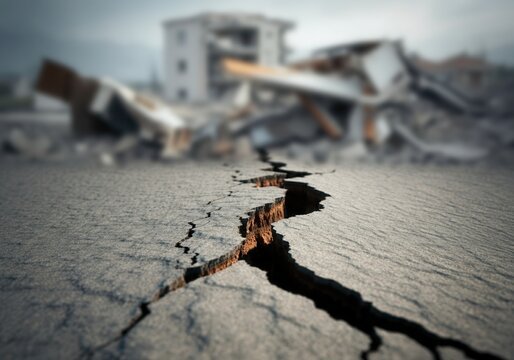
News stories are what people reported. The Planet view is what the instruments reported. It shows natural events as the agencies that watch them see them, often before any newsroom has written a word.
What the Planet tab shows
Six kinds of event, each with its own color:
- Earthquakes: every quake of magnitude 4.5 or more in the past seven days, from the US Geological Survey, updated every minute.
- Storms: tropical cyclones (hurricanes, typhoons and cyclones are the same thing with regional names), with their strongest winds and their track so far and forecast.
- Floods, volcanoes, droughts and wildfires currently on alert.
The storms, floods, volcanoes, droughts and fires come from GDACS, the Global Disaster Alert and Coordination System run by the United Nations and the European Commission. It exists to tell aid agencies where help may be needed, which makes it a good source for the rest of us.
The data is fetched straight from those agencies by your browser. Nothing passes through One Turn's own computers, so what you see is as current as the source.
Magnitude: what the numbers mean
Earthquake magnitude is a logarithmic scale, and the numbers are smaller than they feel. Each whole step up is about 32 times more energy. A magnitude 6 releases about 32 times the energy of a magnitude 5, and about 1,000 times that of a magnitude 4.
Roughly:
- 4.5 to 5.4: felt clearly, light damage near the center. There are more than a thousand of these a year.
- 5.5 to 6.4: damage to weak buildings. Around a hundred a year.
- 6.5 to 7.4: serious damage over a wide area. Ten to twenty a year.
- 7.5 and up: a major earthquake. One or two a year, sometimes none.
Magnitude is not the whole story. Depth matters: a magnitude 6 ten kilometers down can be far more destructive than a magnitude 7 at 500 kilometers, because the shaking has to travel through so much more rock to reach the surface. The Planet view shows depth for each quake. And a quake under the sea can raise a tsunami; the view marks the ones for which a warning was issued.
Alert levels
GDACS rates each event on three levels, and the Planet view shows them in four words:
- Low (green): monitored, little expected impact.
- Moderate (orange): local impact likely; national response.
- Significant or Severe (red): a major humanitarian impact is likely or under way; international help may be needed.
The level combines how strong the event is with how many people live in its path. A powerful typhoon in open ocean is green. A weaker one aimed at a crowded delta is red.
For storms, the strongest sustained wind is shown in kilometers per hour. Hurricane strength starts at 119 km/h (74 mph); the strongest reach well over 250 km/h.
Where the data comes from
- USGS (earthquake.usgs.gov) runs a global network of seismometers and publishes every event within minutes, with its location, depth and magnitude, revised as more stations report.
- GDACS (gdacs.org) combines national weather services, satellite data and the UN's own assessments into one alert feed.
- The aurora glow in the same view comes from NOAA's space weather forecast, a different system; the guide to the Sun explains it.
Each event on the globe links to its source page, where the agencies publish far more detail than fits on a dot.
If you live near one
The Planet view is not a warning system. Your national weather service and civil defense agency are, and their alerts arrive faster and know your area. But the basics are the same everywhere.
In an earthquake, drop, take cover under something solid and hold on until the shaking stops; do not run outside while it is shaking. Near the coast after a strong quake, move to high ground without waiting for a warning. Before a storm, know your evacuation route and leave when told to. In a wildfire, leave early; the smoke arrives before the flames and the roads fill up.
The view's most useful habit is the simplest one: open it when a story on the globe mentions a disaster, and see for yourself how big it is.
Written by One Turn for One Turn. Unlike the daily summaries, articles are written by a person.